BURNS
Trapped means trouble
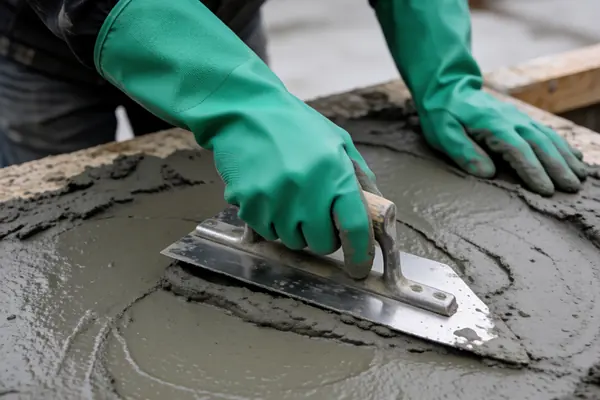
HSE says a serious burn or ulcer can rapidly develop if wet cement is trapped against the skin. Burns often take months to heal.
Check a task touchmixers

SAFE MIXING
A barrow of concrete looks harmless.
But wet cement is highly alkaline. If it gets trapped against skin, inside a glove or a boot or under a knee, the Health and Safety Executive warns that a serious burn can develop quickly. A few simple habits keep it off you.
KEEP IT OFF and wash it off fast
Check a taskTHE SHORT ANSWER
Cement harms skin in two ways: burns and dermatitis.
The dust matters too.
BURNS
HSE says a serious burn or ulcer can rapidly develop if wet cement is trapped against the skin. Burns often take months to heal.
Check a taskGLOVES
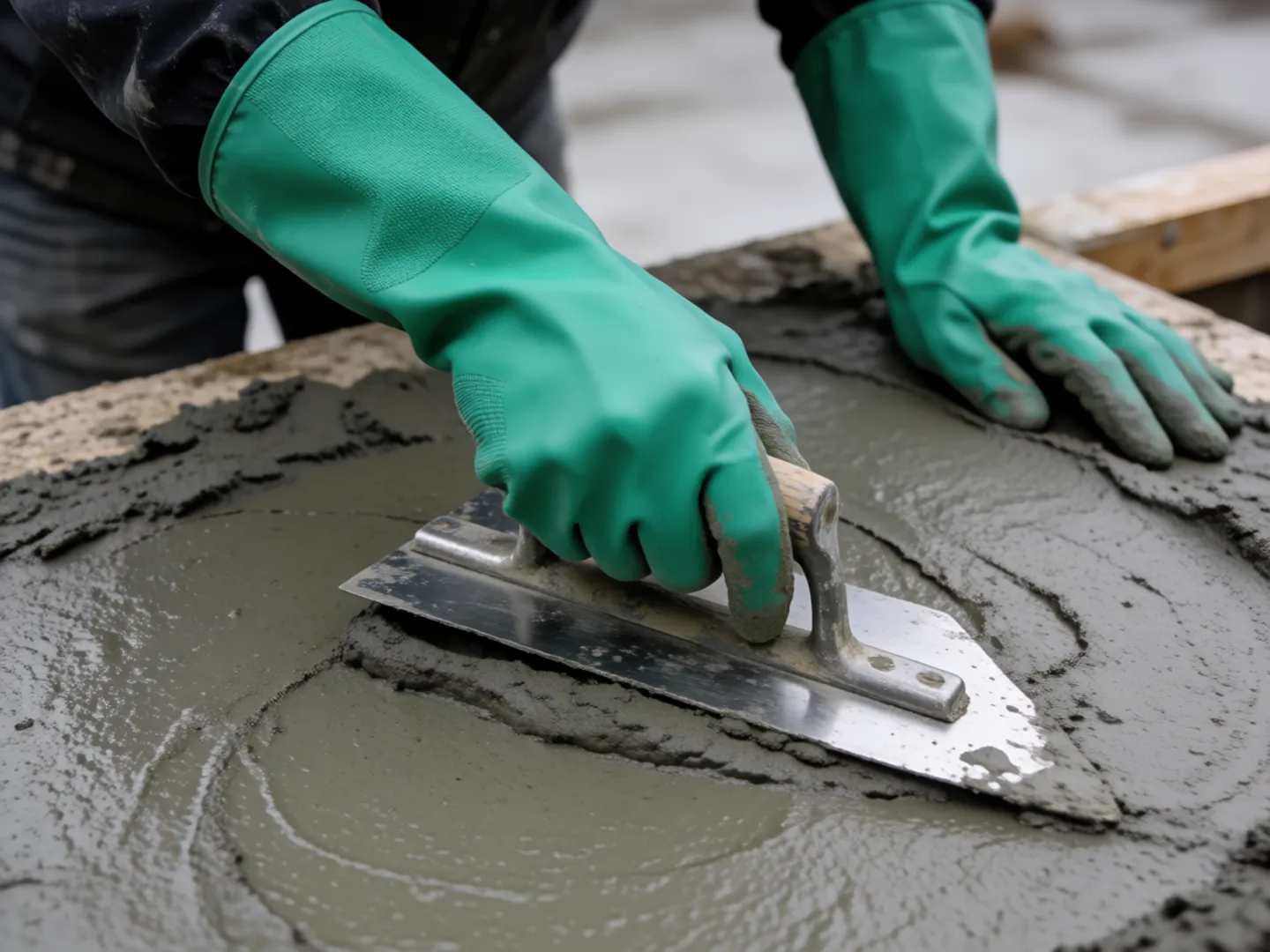
Gloves should be waterproof and suitable for alkaline substances, and long or tight at the cuff so cement cannot get inside.
What to wearDUST
Cement powder irritates the nose and throat. Cutting or drilling hardened concrete can make dust that may contain silica.
See the numbers
FOUR HABITS FROM HSE
HSE's advice is written for building sites, but the same habits suit a weekend patio or a garden wall.
Waterproof gloves suitable for alkalis, long or tight at the cuff. Cement trapped inside a glove can itself cause a burn.
Wear wellington boots for big pours, high enough to keep cement out, with trousers over the top.
Wash cement off skin as soon as possible with warm water and soap, then dry the skin. Rinse cement out of eyes straight away.
Use cement before its shelf date: the ingredient that lowers the risk of allergic dermatitis only works for a limited time.
TWO NUMBERS WORTH KNOWING
One figure for skin allergy,
one for the dust from cutting.
5–10%
Construction workers sensitised to cement
HSE cites research suggesting 5% to 10% of construction workers may be sensitised to cement. Plasterers, concreters and bricklayers are especially at risk.
SKIN ALLERGY · HSE
500+
Construction deaths each year
HSE says over 500 construction workers are believed to die from exposure to silica dust every year.
SILICA DUST · HSE
The allergy comes from hexavalent chromium in cement. Manufacturers add an ingredient to lower it, but it only works for a limited period, as shown by the shelf date on the bag.
A QUICK TASK CHECK
Pick a job to see the main risk HSE describes and how to reduce it. The bar shows how serious the risk is.
Based on HSE guidance on cement and construction dust. General information, not medical advice.
TWO KINDS OF DERMATITIS
Fine cement particles, often mixed with sand, can abrade skin and cause irritant dermatitis, which usually clears with treatment but worsens with continued exposure. Skin affected feels itchy and sore, and looks red, scaly and cracked.
Allergic dermatitis is different: hexavalent chromium sensitises the skin, and once that happens any future exposure can trigger it. HSE notes some skilled tradespeople have had to change trade because of it.
Questions
HSE says the main cause is thought to be the alkalinity of wet cement. Burns happen when it is trapped against skin, for example in a boot or glove or under a knee.
They help, but choose waterproof gloves suitable for alkalis that are long or tight at the cuff. Cement trapped inside a glove can cause a burn.
HSE advises washing it off as soon as possible. Use warm water and soap or a skin cleanser, then dry the skin. If you are worried about a burn, get medical advice.
Cement powder irritates the nose and throat, and cutting or drilling set concrete can produce dust containing silica, which can cause serious lung disease.
The ingredient added to reduce the risk of allergic dermatitis is effective only for a limited period, as indicated by the shelf date, so rotate bags and use them in date.
Updated
ABOUT THIS NAME
touchmixers.com is part of the DoodleSale portfolio. It isn't in an auction right now, but you can ask about leasing it.